Returns a vector of colors drawn from one of the palettes in
EraPalettes. Supports both discrete (curated subsets) and
continuous (interpolated) palettes.
Arguments
- palette_name
Character. Name of the palette; must be one of
names(EraPalettes).- n
Integer. Number of colors to return. Defaults to the full palette length.
- type
One of
"discrete"or"continuous". If omitted, chosen automatically:"continuous"whennexceeds the palette length, otherwise"discrete".- direction
1for the standard order,-1for reversed.- override_order
Logical. If
TRUE, return colors in their stored order rather than the curated order-of-use for the requestedn.- return_hex
Logical. If
TRUE, also prints the hex codes.
Value
An object of class "palette": a character vector of hex
codes with the palette name stored as an attribute.
Examples
# Discrete palette using the curated order-of-use
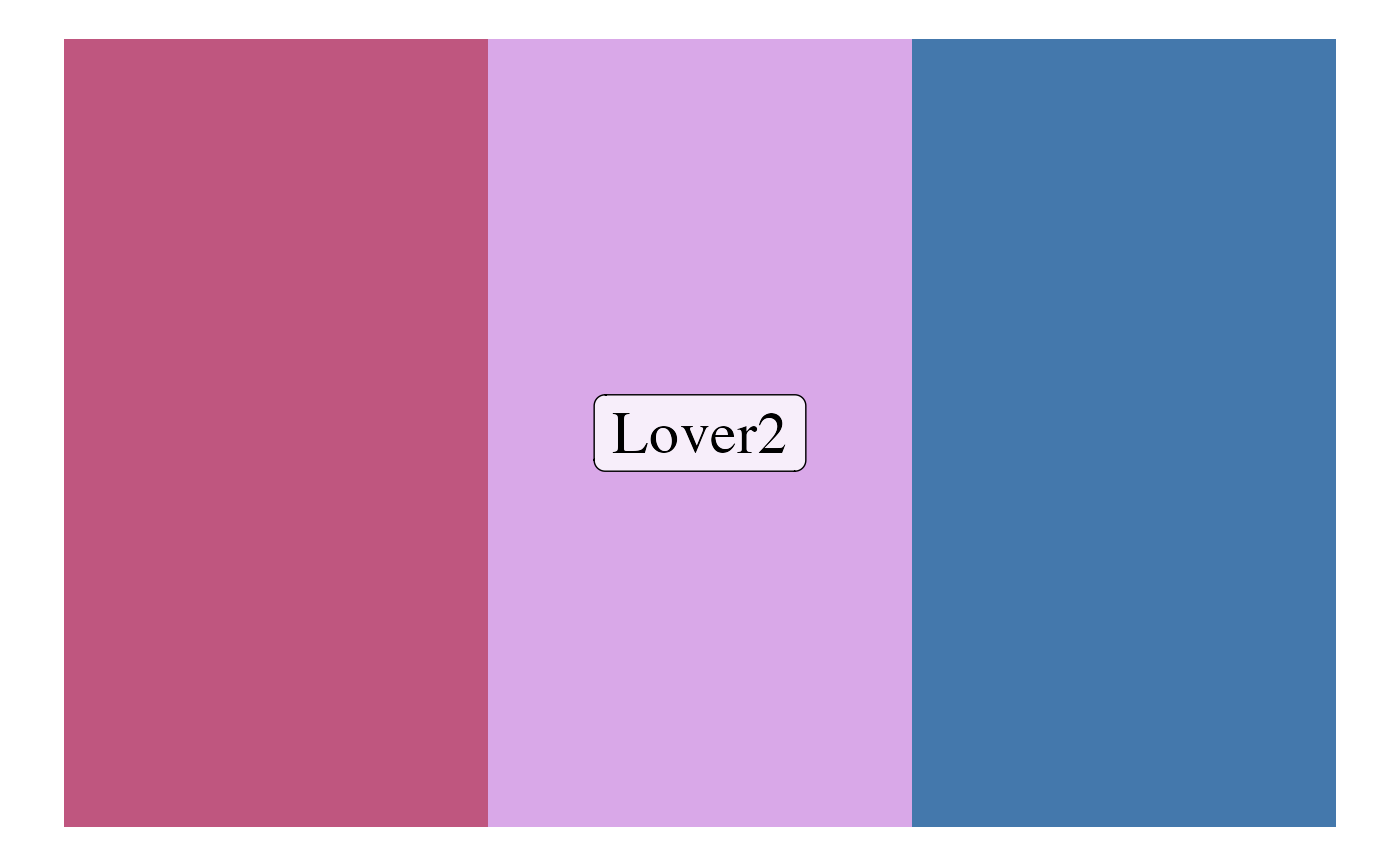
print(era.brewer("Lover2", n = 3))
 # Continuous interpolation when n exceeds the stored palette length
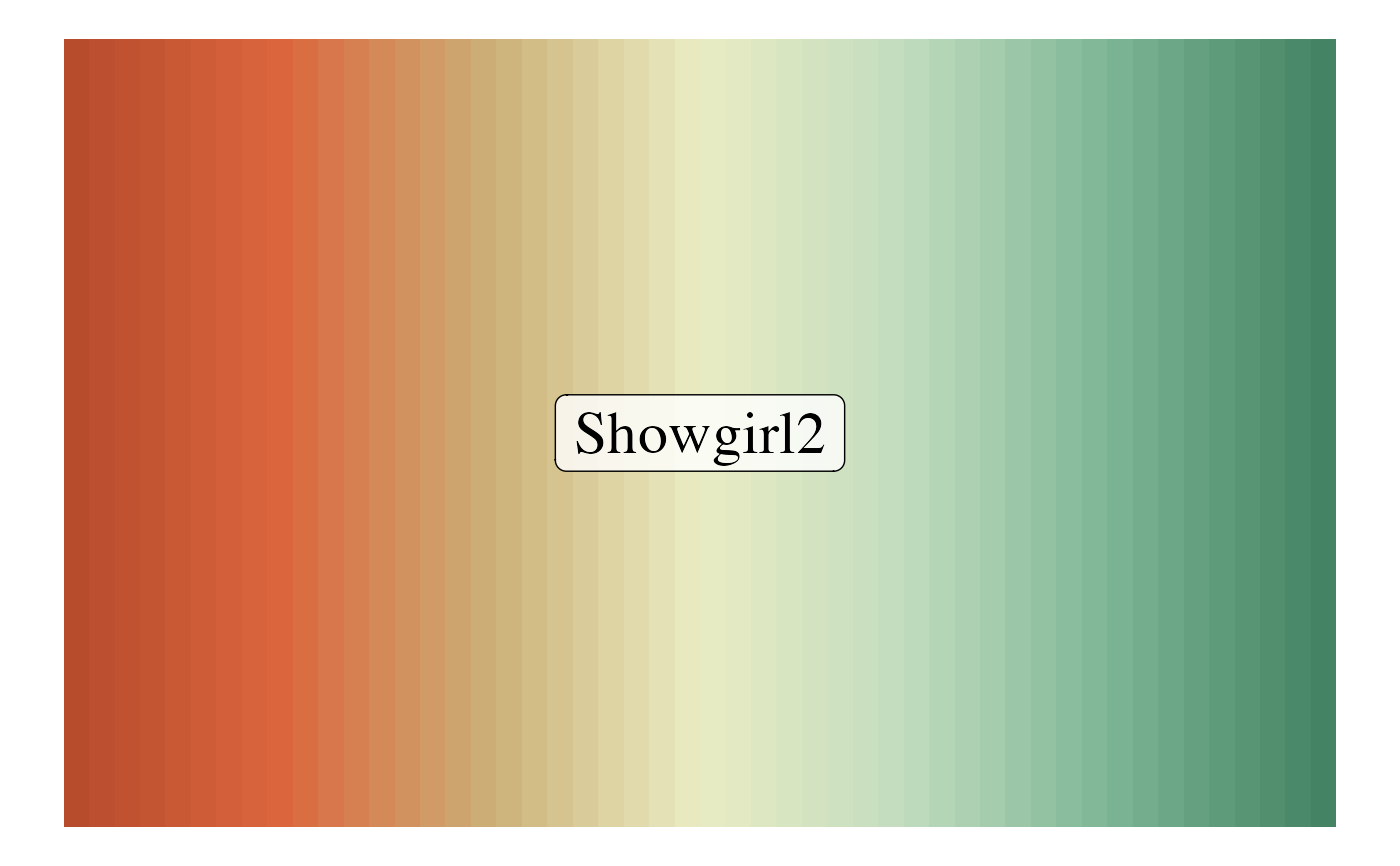
print(era.brewer("Showgirl2", n = 50, type = "continuous"))
# Continuous interpolation when n exceeds the stored palette length
print(era.brewer("Showgirl2", n = 50, type = "continuous"))
 # Reverse direction
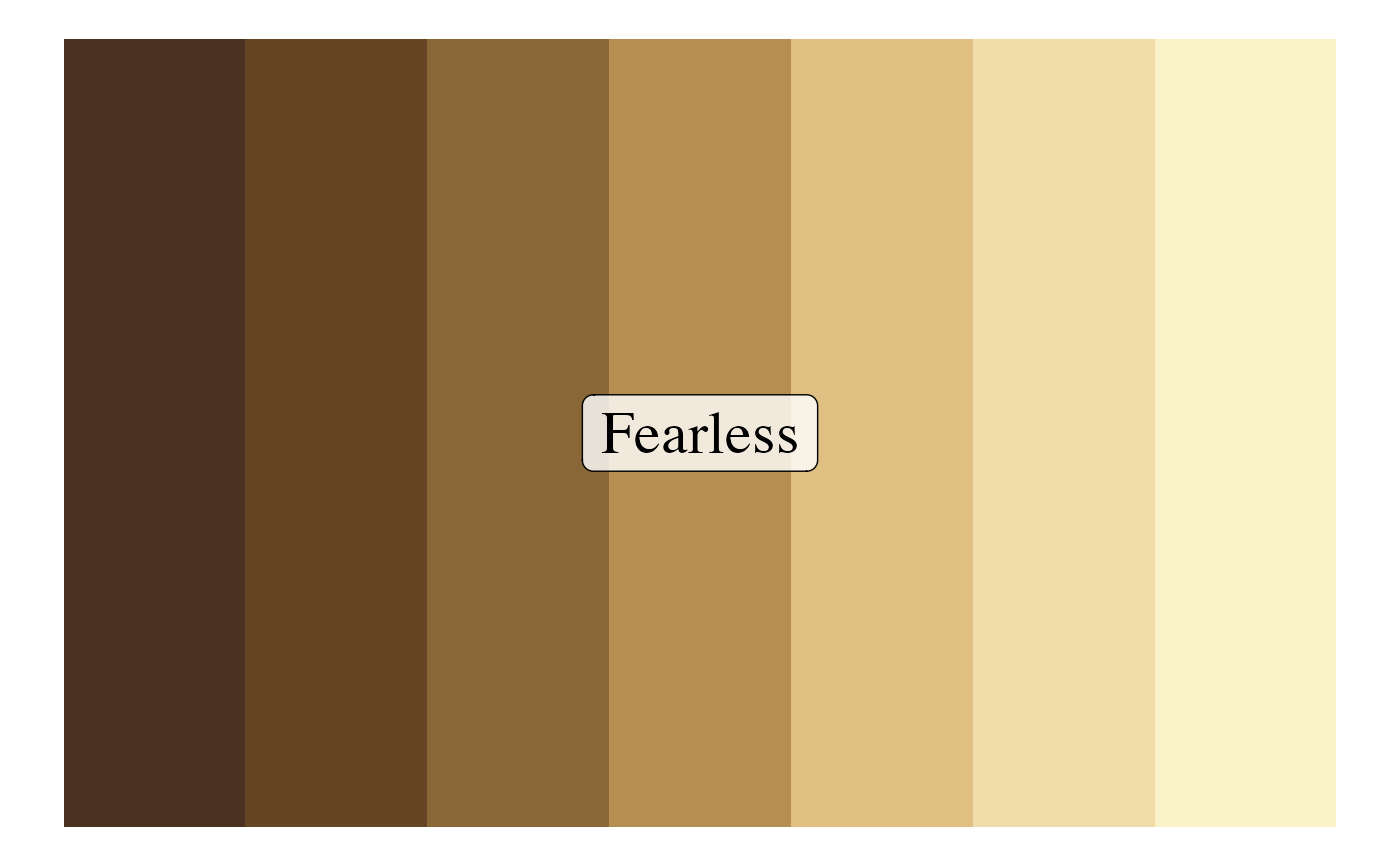
print(era.brewer("Fearless", direction = -1))
# Reverse direction
print(era.brewer("Fearless", direction = -1))
 # Plug into a ggplot2 manual scale
library(ggplot2)
ggplot(iris, aes(Sepal.Length, Sepal.Width, color = Species)) +
geom_point() +
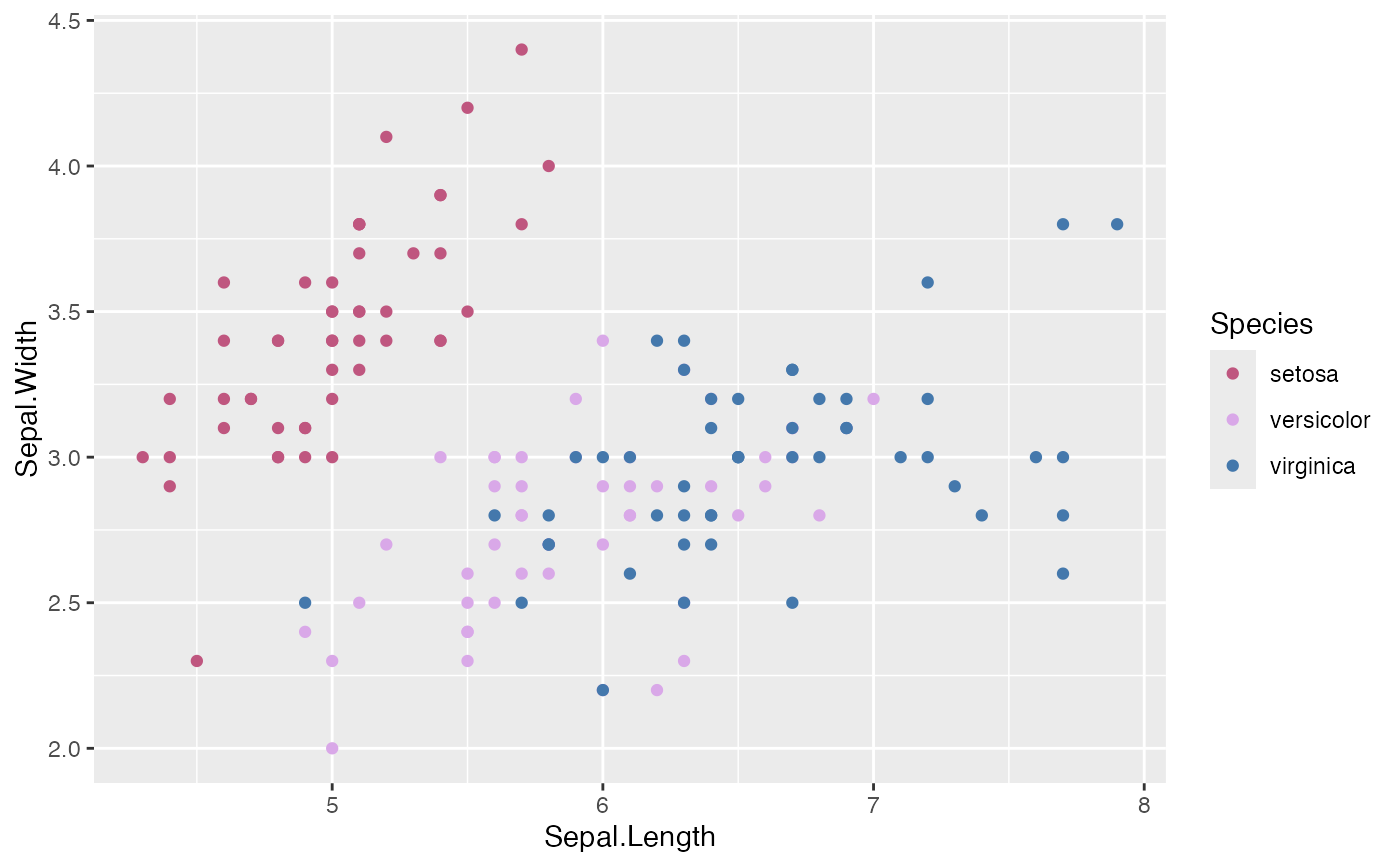
scale_color_manual(values = era.brewer("Lover2", n = 3))
# Plug into a ggplot2 manual scale
library(ggplot2)
ggplot(iris, aes(Sepal.Length, Sepal.Width, color = Species)) +
geom_point() +
scale_color_manual(values = era.brewer("Lover2", n = 3))